Maxey could end up as one of the better value picks in this draft, falling out of the teens to a nice, cushy landing spot in Philadelphia. As a capable defender and undersized two-guard who needs to learn to play away from the ball, it's hard to think of a better situation for him than playing alongside an oversized, brilliant playmaker like Ben Simmons. Some scouts viewed him as a talent with lottery-level upside, and the Sixers will hope he's the next Kentucky product to take a major leap at the NBA level. He'll have time to learn how to fit in and should benefit from landing in a competitive situation immediately.

Maxey will begin as a role player for Philly, but could be an outstanding bench piece and potential starter in time. As a freshman at Florida State last season, Patrick Williams' numbers weren't eye-popping -- he was just a high-level role player who did a lot of things well without much fanfare. But scouts I've talked to rave about him and his NBA potential because of his size (6-8), wingspan (6-11) and defensive playmaking potential.

Butler has been arguably the best player in college basketball and on one of the two best teams in college basketball so far this season. The 6'3 junior guard has made massive improvements as an outside shooter over his three-year career, and has hit 42-of-93 (45.2 percent) deep shots to start his career. He's having the best playmaking season of his career (31.5 percent assist rate) and is scoring more efficiently inside the arc than ever before by making 52.4 percent of his two-point attempts.
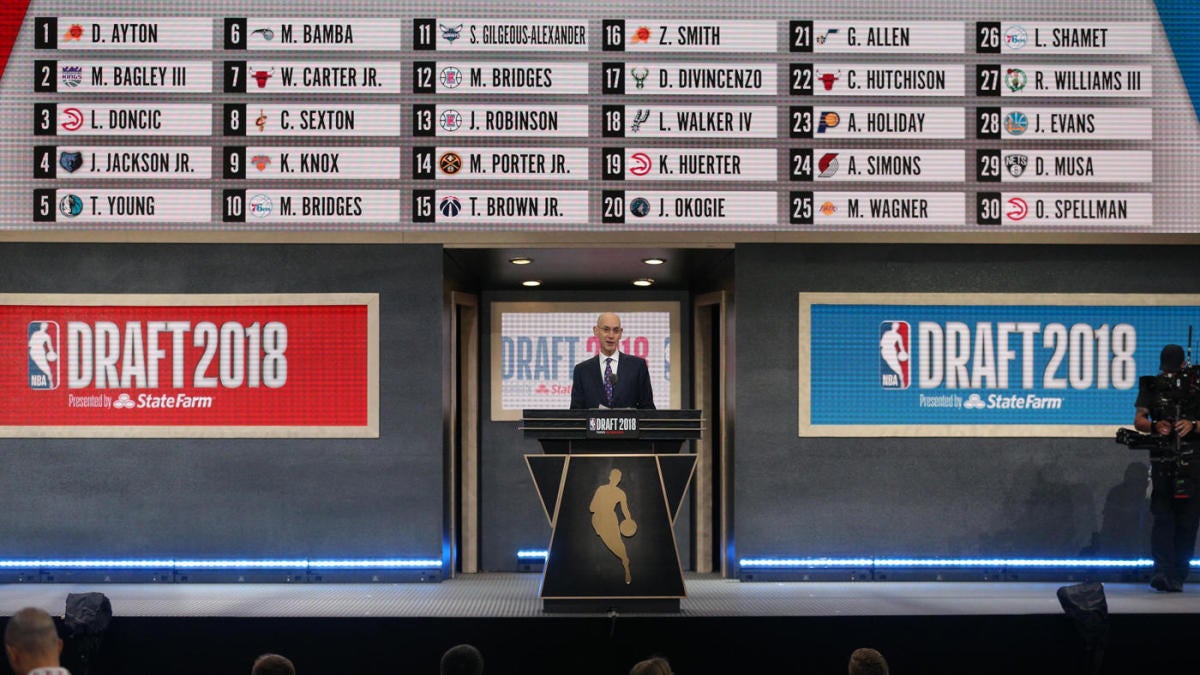
Butler's size may limit him to a one-position defender in the league, but he's been wrecking havoc in the passing lanes all year with a monstrous 4.5 percent steal rate for the No. 3 ranked unit in the country. One of the best pure athletes in the class, Johnson is an explosive leaper and high-upside defensive prospect who is still learning how to pick his spots on the floor. Johnson is mostly an off-ball player for Tennessee as a freshman, looking for cutting lanes to the basket and attacking closeouts off spot-ups. Johnson's above the rim finishing will be his offensive calling card, and it's helped him make more than 50 percent of his two-point field goals so far. Strangely, he's ranking only in the 14th percentile in transition opportunities, which is curious for a player with his physical gifts.

Like Springer, Johnson is a big part of Tennessee elite defense. The NBA team that takes him will have to work to develop his outside shot. The Texas sophomore didn't start playing organized basketball until he was 15 years old, but he's blossomed into a 6'11 forward with tantalizing flashes of long-term potential his short time with the Longhorns.
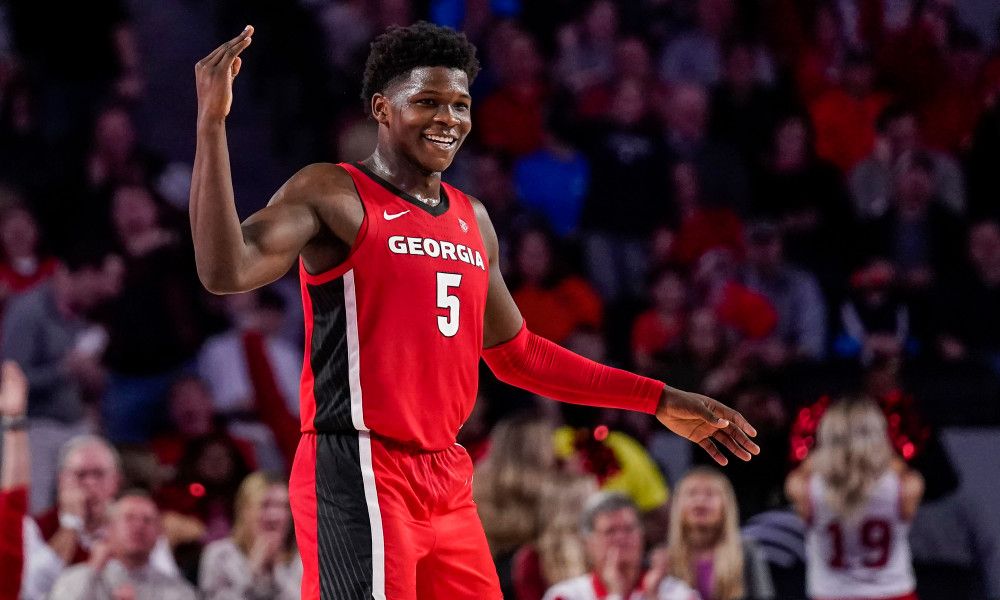
Jones still doesn't start for his college team, but it's impossible to miss his talent when he is on the floor. Oozing with elite physical tools, Jones as a combination of length and quickness that can't be taught. He spent the offseason trying to become more of a catch-and-shoot threat, and he's hit 8-of-18 shots from deep so far.

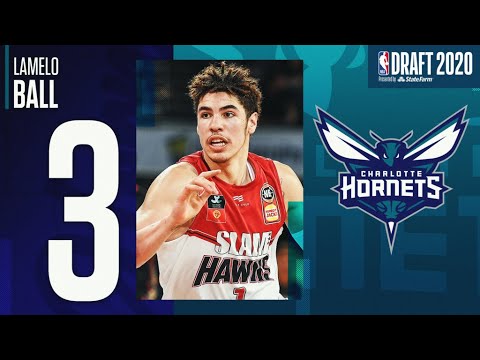
His best basketball remains far in front of him, but Jones' natural talent could have some team gambling on him in the lottery. Whether the Hornets trade for Russell Westbrook or not (which would be quite ill-advised), they'll want to pick the prospect with the most upside at no. 3 regardless. So while Onyeka Okongwu has been linked to Charlotte here, the right choice is the ultra-talented, ultra-risky LaMelo Ball. Despite his shaky shot selection and allergy to playing defense, Ball is the only player in this draft with elite playmaking abilities. And, at 6-foot-7, he could be a potential nightmare of a mismatch for opposing guards once he learns the NBA game. Kispert is a 6'6 knockdown shooter who is already playing in a pro-style offense on Gonzaga.

As the Zags devastate opponents with an onslaught of weapons on the country's most efficient unit, Kispert has established himself as the rare senior with a shot at getting drafted in the lottery. Kispert is a high volume, highly accurate shooter who is hitting 48.6 percent of his attempts from deep this year after hitting 43.8 percent of his threes last year. He has a quick trigger and deep range, which should fit in any modern offense. Scouts will wonder if he's closer to Joe Harris or Doug McDermott in terms of four-year college players with dynamic long range shooting ability. Green was a mega-hyped high school player who decided to bypass college basketball to pioneer the G League's new developmental initiative. Before his Ignite team begins a 15-game schedule in February, he already feels like a certain top-five pick based off his physical tools alone.

The word 'elite' gets thrown around too often in draft evaluations, but Green's explosiveness as a leaper around the basket absolutely deserves the descriptor. He is possibly this draft's best pure scorer, a three-level bucket-getter who can stockpile easy points on drives to the rim or difficult ones in the half-court with his shot-making ability. A Thunder team that is two years away from no longer obsessively trading for future draft picks took an 18-year-old who is at least two years away from being a productive NBA player. Pokusevski is a 7-foot, 200-pound guard who plays with the confidence of someone who has read all of the glowing internet scouting reports about him. It will take a long time for him to develop physically, and it's unclear what role makes sense for him at the NBA level. The good news is that a team with a literal war chest of first-rounders has nothing to lose if this doesn't pan out.
Vassell is the best 3-and-D prospect in this year's draft and has more shot-creating talent than he showed in college. His ability to guard on the wing, play as a help-side defender, and be an efficient offensive player makes him a great fit next to San Antonio's collection of young, ball-dominant guards. There's very little chance that Vassell busts, and he has the chance to be a more valuable NBA player than a lot of the players taken ahead of him. The only concern is that predraft video where he bizarrely changed his shooting motion.
Everyone in San Antonio just has to pretend that never happened. This is simultaneously the safest pick and biggest gamble at the top of the draft. Wiseman played only three games at Memphis, but most NBA teams were already familiar with his game from his high school days. He's a massive 7-footer with elite athleticism and the ability to contribute right away.

The question is whether he will be good enough to overcome the diminishing value of the center position. Golden State is the best situation for him, but they will need him to grow a lot on both ends of the floor. Chicago's decision to take Williams will stand as one of the most fascinating evaluations in this draft, both in the short and long-term, and this is a major swing on upside, but also a measured one. Williams was viewed by teams as a potential lottery pick dating back to the spring, and as the entire NBA pored over game film and assessed the draft over the course of the year.

The youngest college player in the draft, Williams quietly came into play as Chicago's likely choice over the past couple days. This is Arturas Karnisovas' first selection at the helm in Chicago, and it should stand as a memorable one, one way or another. BYU Cougars senior Yoeli Childs was easily one of the most underrated players in college basketball this season, averaging 22.2 points and 9.0 rebounds per game while shooting a stunning 22-for-45 (48.9%) on 3-pointers. The forward played a crucial role in helping BYU finish with a top-10 offense nationally this season, per KenPom. Among all Division I players who had as many pick-and-pop possessions, according to Synergy, only one was more efficient. Meanwhile, his defensive rebound percentage ( 28.2%) was the best in the West Conference Conference.

Duke freshman Cassius Stanley is one of the most versatile offensive players in the 2020 draft class. He can play anywhere one through three, including moments as the primary ballhandler both in pick-and-roll and in transition. Stanley is an outstanding athlete, as he broke the school record for vertical leap set by Zion Williamson. Stanley is one of the most electrifying prospects to come out of Los Angeles. He would be a great addition to his hometown Lakers, especially considering the organization does not have many draft picks over the next few years. The Wolves must really believe in Ricky Rubio as a leader.

They traded for their former point guard on draft night and then selected a young guard from his old European team. Bolmaro is 6-foot-7 and doesn't have the same defensive chops as Rubio, but he's smart and a good playmaker with a better jumper than his fellow Barcelona product. He will need to continue improving as a shooter because he doesn't have the athleticism to build his game around attacking the rim at the NBA level.
This is a great combination of team fit and best player available for Philadelphia. Maxey is a combo guard who can play on and off the ball and defend at a high level. The only reason that he's not a lottery pick is that he's 6-foot-3 and won't be a primary ball handler in the NBA. He'll be able to defend point guards while serving as a secondary playmaker. Don't worry too much about him shooting 29 percent from 3.

Shooting 83.3 percent from the free throw line is a better indicator of his potential from deep. Okoro is a great fit next to Darius Garland and Collin Sexton in the sense that he can play defense and they can't. He also doesn't need to dominate the ball, which is a big plus next to their shot-happy backcourt. The question is whether he can develop his jumper enough to threaten defenses off the ball. The history of perimeter players taken in the lottery with his shooting percentages is ugly. The good news is that if Okoro can become an elite shooter, he'd be as good as any player in this draft.

That's just a big if in a league where shooting has never been more important. Mobley's talent leaps off the screen whenever you watch USC. The 7-foot freshman is oozing with natural ability and is just starting to grow into a skill set that feels like everything today's NBA demands out of a big. The skinny 7-foot center projects as a terrific defensive prospect with a 7'5 wingspan, refined shot blocking instincts (9.4 percent block rate), and the lateral quickness to hold his own on switches. Offensively, Mobley's best attribute is his feel for the game as a passer.

He has a striking ability to process defensive coverages, which should make him a deadly short roll passer in the league. His three-point stroke is making progress (7-for-22 on the season), too. A player some had pegged for the lottery, Hampton took a bit of a tumble here on draft night, and it's one that, quietly, was somewhat predictable. He took a risk playing in New Zealand this season, and his stock dropped after his play in the NBL raised questions about his feel and shooting ability. But he's a high-octane athlete and another interesting pickup for the Nuggets, who have had recent success taking upside swings on players like Michael Porter Jr. and Bol Bol.

They'll hope Hampton is their latest reclamation project. Stewart was a highly decorated high school player who became an extremely efficient offensive player for an underachieving Washington team. But it's hard to see the value of taking a traditional big man whose best skill is post scoring in the middle of the first round. Stewart doesn't have great size for his position, needs to improve as a perimeter player on both ends of the floor, and spent his freshman season of college playing in the middle of a 2-3 zone. The odds are that he will have a productive NBA career, but you could say that about some of the big men taken in the second round, too.

Suggs is often playing in the open court with the Zags, partially because he's posting one of the best steal rates (4.6 percent) in college basketball right now. The most eye opening development in his game has been his shooting. Suggs is 18-of-47 (38.3 percent) from three so far this year. There will be questions about his ball handling and ability to dust NBA defenders off the dribble, but he has a high floor as a versatile guard who can play on or off the ball. He should get plenty of opportunities to prove he's a top three prospect as Gonzaga chases a perfect season. Achiuwa fell in the draft a bit, but ended up in a nice situation with the Heat, whose strong development program could be exactly what he needs to access his full potential.

Achiuwa is a bit unpolished and is an older player, but he was highly productive in his lone year at Memphis and has the physical tools and powerful athleticism to develop into a rotation piece. Some scouts questioned Achiuwa's feel, but if there's a team that can get him to play to his strengths as a rim-runner effectively, it's probably Miami. It is not an understatement to call the Knicks' love of Toppin one of the worst-kept secrets in the NBA. As of Wednesday morning, New York was attempting to move up in the draft, and rival teams were widely speculating that Toppin was their target.

As it turns out, he was available to them at their pick, and will step in immediately as one of the faces of their team. Toppin was the best player in college basketball last season, and while he's 22 years old—ancient for a lottery pick—his unique, late-blooming trajectory has produced some optimism that he'll deliver on his promise. Toppin has defensive concerns that the Knicks will have to work around. But the presence of several bigs on their roster should not be viewed as a serious issue, as R.J. Barrett, Mitchell Robinson and now Toppin are their only essential pieces of the future.

Toppin should be in the mix for Rookie of the Year if he hits the ground running. Payton Pritchard, who won four consecutive Oregon state titles at West Lynn High School, had been one of the top college players in the country. He averaged 20.5 points with 4.3 rebounds and 5.5 assists per game while shooting 41.5% from 3-point range. Pritchard won Pac-12 Player of the Year and the Lute Olson Award for the most outstanding non-freshman in the nation.

He was Oregon's first consensus first-team All-American in 80 years. He is a low-ceiling, high-floor kind of player who may be able to make an impact as soon as next season on a two-way deal or and end-of-bench roster spot. Senior guard Skylar Mays averaged 16.7 points with 5.0 rebounds per game this season.

He led LSU tp finish among the top five offenses in Division I, according to KenPom. He is a solid 3-and-D prospect who connected on 1.6 shots from beyond the arc per game while also forcing 1.8 steals per game. The guard shot 85.4% on free throws, which projects well for his shooting form. Mays was also one of the most efficient scorers out of the pick-and-roll in the country. He is tall for a primary ballhandler, and his overall feel for the game is a bit reminiscent of Brooklyn Nets guard Spencer Dinwiddie. Colorado junior Tyler Bey averaged 13.8 points, 1.5 steals and 1.2 blocks per game this season.

After winning Pac-12 Most Improved Player of the Year in 2019, he won Pac-12 Defensive Player of the Year in 2020. He was pulling down 9.0 rebounds per game, too, far more than expected for a player his size. In fact, his defensive rebound percentage ( 27.7%) ranked fourth-best among all players 6-7 or shorter. Bey would be a solid option on the wing for Oklahoma City, potentially replacing Terrance Ferguson in the starting lineup at some point. Devin Vassell playing defense alongside Spurs guard Dejounte Murray would be a dream for any San Antonio fan - and a nightmare for opponents. He is also an above-average shooter and has enough size to be a potential starting role player in the NBA.

Vassell could be this year's version of Brandon Clarke. Even if neither is ever an All-Star, there is a case to select that type of prospect early because they feel closer to a sure thing in the pros than boom-or-bust prospects. Sam Presti isn't the only GM who loves long, athletic wings with raw offensive games and incredible physical tools. The biggest surprise of the night might be that the Thunder traded McDaniels instead of keeping him for themselves. He's a 6-foot-9 wing who was seen as a lottery pick at this time last year before imploding over the second half of the NCAA season.

His older brother, Jalen, exceeded expectations as a second-round pick last season. Few projected Quickley as a first-round pick, but perhaps we shouldn't be surprised that a Kentucky guard with a knockdown jumper went higher than expected after Tyler Herro's success last season. The problem is that Quickley's not the typical Kentucky guard when it comes to size or athleticism.
There are a lot of 6-foot-3 shooting specialists floating around the college basketball world. But none of those guys are being taken in the first round. Getting Quickley drafted in the first round is a great feather in the cap for John Calipari. The Celtics drafted for fit rather than upside, which makes sense given the current state of their team.


